
 Italiano
 English
From:
27.10 €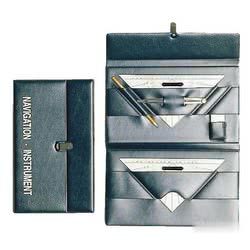
From:
66.30 €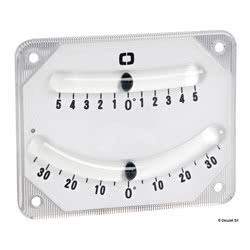
From:
10.20 €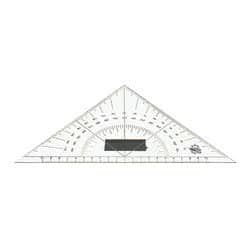
From:
7.33 €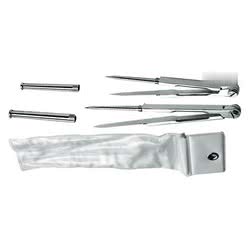
From:
36.80 €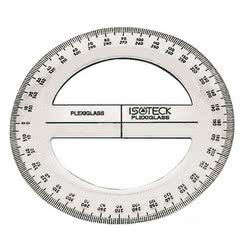
From:
1.81 €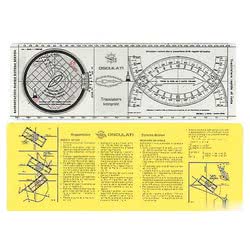
From:
32.50 €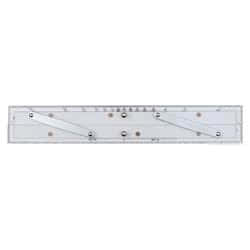
From:
19.30 €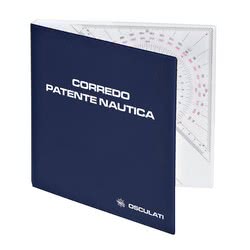
From:
29.00 €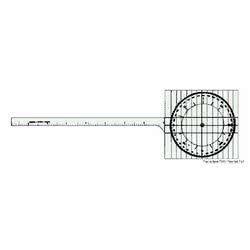
From:
11.03 €Even with GPS and chartplotters, a set of nautical charting instruments remains crucial onboard. A power outage, antenna failure, or simply the desire to hone your navigation skills demands the use of compasses, protractors, and plotting triangles. Consider also a digital protractor for precise angle measurements.
Our charting kits include everything you need to plot courses, bearings, and fixes with precision. We offer both individual instruments and complete sets, with a protective case to safeguard them from moisture and the elements. Brass models ensure robustness and longevity, while plexiglass versions offer transparency and ease of use. You might also consider a digital level for other onboard tasks.
An inclinometer, sometimes called a clinometer, is a valuable tool for measuring a boat's roll and pitch angle. It can be used to assess the vessel's stability and to optimize sail trim, especially on dinghies and sailing cruisers. A digital inclinometer can offer even greater precision.
Complete your equipment with a good pair of marine binoculars and a hand bearing compass. And don't forget the nautical charts!
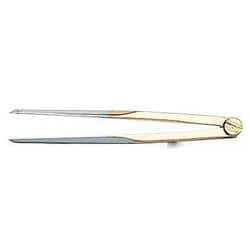
A chart compass is used to draw circles and measure distances on nautical charts. A hand bearing compass, on the other hand, is used to measure the angle between the boat's bow and a landmark (e.g., a lighthouse or another vessel). Some compass models integrate both functions.
A nautical protractor is used to measure angles on charts. Place the center of the protractor on the point where you want to measure the angle and align the arms with the two reference points. The reading on the protractor scale indicates the size of the angle.
When choosing an inclinometer, consider the size of your boat, the type of sailing you do, and the ease of reading the instrument. For sailboats, it's important to choose an inclinometer with a sufficiently large scale to accurately measure roll and pitch angles. Make sure it is resistant to water and saltwater.
A chart compass is used to draw circles and measure distances on nautical charts. A hand bearing compass, on the other hand, is used to measure the angle between the boat's bow and a landmark (e.g., a lighthouse or another vessel). Some compass models integrate both functions.
A nautical protractor is used to measure angles on charts. Place the center of the protractor on the point where you want to measure the angle and align the arms with the two reference points. The reading on the protractor scale indicates the size of the angle.
When choosing an inclinometer, consider the size of your boat, the type of sailing you do, and the ease of reading the instrument. For sailboats, it's important to choose an inclinometer with a sufficiently large scale to accurately measure roll and pitch angles. Make sure it is resistant to water and saltwater.
90% of the orders are shipped within 24H. Have a look at the availability and shipment time in the product page
We work on boating since 1982. You will find experienced and polite staff
You can choose between Paypal, Credit Card, Postepay and Transfer
We only use packaging from recycled material within our own store