
 Italiano
 English
From:
338.10 €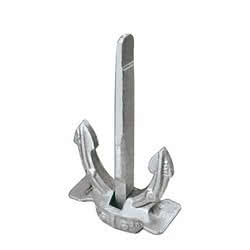
From:
197.20 €
From:
130.40 €
From:
20.50 €
From:
51.90 €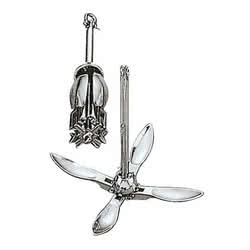
From:
8.48 €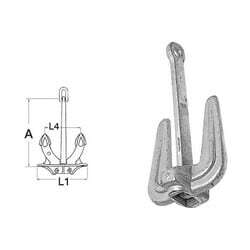
From:
18.00 €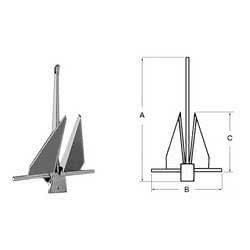
From:
22.80 €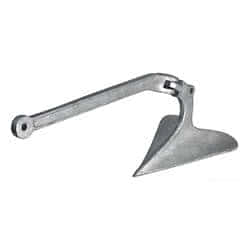
From:
65.00 €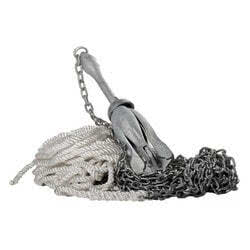
From:
100.60 €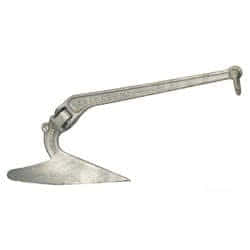
From:
262.90 €
From:
45.50 €In this section dedicated to galvanized anchors, you'll find models suitable for every need, from small boats to larger cabin cruisers. Anchoring is a fundamental element for safety at sea, which is why we only offer quality products made with materials resistant to marine corrosion.
Available are both individual galvanized anchors and complete mooring kits with rope and chain, ready for immediate use. These kits are particularly suitable for those who need to replace their entire anchoring system or for those who are outfitting a new boat. The galvanization protects the steel from rust, ensuring long-lasting durability, even under harsh operating conditions.
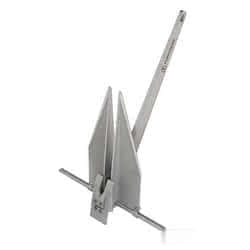
Among the available models, you can find the Admiralty anchor, a timeless classic, the robust and reliable Hall anchor, and the Trefoil anchor, which is foldable and easy to stow. For those looking for a lightweight and high-performance anchor, we recommend the Danforth models.
Choosing the right anchor depends primarily on two factors: the length of the boat and the type of seabed you typically navigate. In general, a light anchor is sufficient for smaller boats, while a heavier model is necessary for larger ones. The type of seabed also influences the choice: plow anchors are suitable for sandy bottoms, while plow or grapnel anchors are more suitable for rocky bottoms.
Complete your anchoring system with our AISI 316 stainless steel shackles and swivels to prevent chain twisting. And for safe mooring, discover our range of fenders and mooring lines.
A galvanized anchor is made of carbon steel with a zinc coating that protects it from corrosion. A stainless steel anchor is made of a stainless steel alloy, which is naturally resistant to corrosion. Stainless steel offers greater durability over time, but it comes at a higher cost. Both are excellent solutions, depending on your budget and needs.
The weight of the anchor depends on the length of the boat and the navigation conditions. In general, it is recommended to use an anchor with a weight of approximately 1 kg for every meter of boat length. However, if you are sailing in areas with strong currents or winds, it is advisable to use a heavier anchor.
To protect the anchor rode from wear, it is advisable to use a stainless steel thimble inside the chain link. The thimble prevents the rope from fraying due to rubbing against the chain.
No, it is not recommended. Each type of seabed requires a specific anchor. Plow anchors are suitable for sandy bottoms, while plow or grapnel anchors are more suitable for rocky bottoms. For mixed bottoms, it is recommended to use a multipurpose anchor.
A galvanized anchor is made of carbon steel with a zinc coating that protects it from corrosion. A stainless steel anchor is made of a stainless steel alloy, which is naturally resistant to corrosion. Stainless steel offers greater durability over time, but it comes at a higher cost. Both are excellent solutions, depending on your budget and needs.
The weight of the anchor depends on the length of the boat and the navigation conditions. In general, it is recommended to use an anchor with a weight of approximately 1 kg for every meter of boat length. However, if you are sailing in areas with strong currents or winds, it is advisable to use a heavier anchor.
To protect the anchor rode from wear, it is advisable to use a stainless steel thimble inside the chain link. The thimble prevents the rope from fraying due to rubbing against the chain.
No, it is not recommended. Each type of seabed requires a specific anchor. Plow anchors are suitable for sandy bottoms, while plow or grapnel anchors are more suitable for rocky bottoms. For mixed bottoms, it is recommended to use a multipurpose anchor.
90% of the orders are shipped within 24H. Have a look at the availability and shipment time in the product page
We work on boating since 1982. You will find experienced and polite staff
You can choose between Paypal, Credit Card, Postepay and Transfer
We only use packaging from recycled material within our own store